AP Computer Science A Syllabus
AP Computer Science A is an introductory, college-level computer science course. Students learn to design, develop, and analyze programs written in the Java programming language to solve problems and accomplish tasks. The course emphasizes object-oriented programming and design, the use of data structures to organize large sets of data, the development and implementation of algorithms to process data, the analysis of potential solutions, and the ethical and social implications of computing systems.
This course is designed to be the equivalent of a one-semester, introductory college course in computer science. A minimum of 20 hours of hands-on, structured lab experiences are integrated throughout the year to engage students in individual and group problem-solving.
Programming Labs
- Unit 1: Receipt Lab — String methods, method calls, object instantiation.
- Unit 2: Magpie 2.0 Lab — Selection, iteration, String algorithms.
- Unit 3: Virtual Pet Lab — Class design, encapsulation, methods with object references.
- Unit 4: 2048 Lab, Data Set Lab, Digit Recognition Lab — 2D arrays, ArrayList, recursion, file I/O.
| Course: | AP® Computer Science A |
| Academic Year: | 2026–2027 |
| Instructor: | Jeff Ling |
| Email: | jeffling@ghedu.com |
| Office: | 冬韵103 |
| Language: | Java (Java 17+ acceptable; 22 recommended) |
Upon completion of this course, students will be able to:
- Design code — Determine an appropriate program design and develop algorithms to solve problems.
- Develop code — Write and implement program code involving data abstractions and procedural abstractions in Java.
- Analyze code — Determine the output or result of given program code, and explain why code may not compile or work as intended.
- Document code and computing systems — Describe the behavior and initial conditions that produce specified results in a program.
- Use computers responsibly — Understand the ethical and social implications of computer use, including privacy, bias, and intellectual property.
Textbook
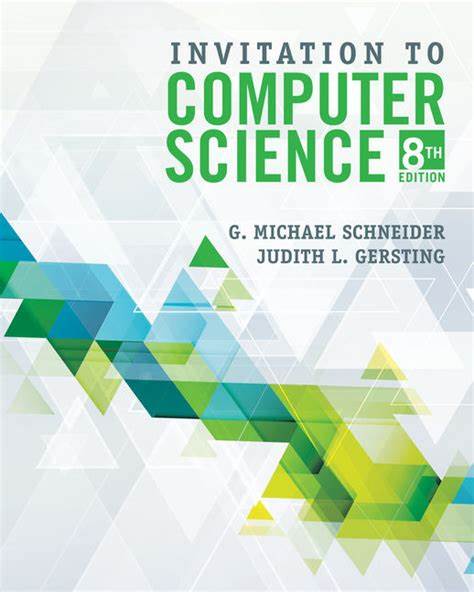
College-level introductory Java programming textbook.
Software & Tools
- Java Development Kit (JDK 17+)
- IDE — jGRASP or BlueJ recommended
- AP Classroom (Progress Checks, Question Bank, Topic Questions)
Course Materials (Provided)
- Course and Exam Description (CED) — Effective Fall 2025
- Java Quick Reference sheet (CED Appendix)
- Lab Guides: Receipt Lab, Magpie 2.0 Lab, Virtual Pet Lab, Data Set Lab, 2048 Lab, Digit Recognition Lab
- Slides for each topic
- FRQ Practice Sets (all four question types)
Supplementary Resources
- Released AP CSA Free-Response Questions (prior exam years)
- CodingBat / coding practice platforms
Each semester is graded independently using the same standard. The midterm assessment accounts for 40% of the semester grade and the final assessment for 60%. Each is composed as follows:
Midterm Assessment — 40% of Semester Grade
| Category | Weight |
|---|---|
| Attendance | 15% |
| Class Participation | 15% |
| Homework | 20% |
| Midterm Exam | 50% |
Final Assessment — 60% of Semester Grade
| Category | Weight |
|---|---|
| Attendance | 15% |
| Class Participation | 15% |
| Homework | 20% |
| Final Exam | 50% |
- Late Work Policy: 10% deduction per day late; maximum 50% after 3 days late. Exceptions made for excused absences and emergencies.
- Academic Integrity: AI tools may be used as learning aids outside of assessments, but never on graded work. Unauthorized AI-generated code submission will result in a zero and possible course failure.
Course Schedule
| Week | Dates | Topics | Unit |
|---|---|---|---|
| 1 | Aug 31 – Sep 4 | 1.1 Algorithms & Programming; 1.2 Variables and Data Types | Unit 1: Using Objects and Methods |
| 2 | Sep 7–11 | 1.3 Expressions and Output | Unit 1 |
| 3 | Sep 14–18 | 1.4 Assignment & Input; 1.5 Casting and Ranges | Unit 1 |
| 4 | Sep 21–24 | 1.6 Compound Operators; 1.7 API and Libraries | Unit 1 |
| 🌙 Mid-Autumn Festival — Sep 25–27 (No class) | |||
| 5 | Sep 28–30 | 1.8 Comments; 1.9 Method Signatures; 1.10 Calling Class Methods | Unit 1 |
| 🇨🇳 National Day Holiday — Oct 1–7 (No class) | |||
| 6 | Oct 8–9 | Monthly Exam | — |
| 6 | Oct 12–16 | 1.11 Math Class; 1.12–1.13 Objects and Instances | Unit 1 |
| 7 | Oct 19–23 | 1.14 Instance Methods; 1.15 String Manipulation; Receipt Lab — Unit 1 Complete | Unit 1 |
| 9 | Nov 2–6 | 2.1 Selection; 2.2 Boolean Expressions | Unit 2: Selection and Iteration |
| 📝 Midterm Exam Week — Nov 6–11 | |||
| 🍂 Autumn Outing — Nov 12 (No class) | |||
| 10 | Nov 16–20 | 2.3 if Statements; 2.4 Nested if | Unit 2 |
| 11 | Nov 23–27 | 2.5–2.6 Compound Boolean Expressions | Unit 2 |
| 12 | Nov 30 – Dec 4 | 2.7 while Loops; 2.8 for Loops | Unit 2 |
| 13 | Dec 7–11 | 2.9 Algorithms; 2.10 String Algorithms; Magpie 2.0 Lab — Unit 2 Complete | Unit 2 |
| 📝 Monthly Exam — Dec 14–18 (Monthly Exam Week) | |||
| 15 | Dec 14–18 | 3.1–3.4 Abstraction, Class Anatomy, Constructors | Unit 3: Class Creation |
| 16 | Dec 21–25 | 3.5–3.9 Methods, Scope, this; Virtual Pet Lab — Unit 3 Complete | Unit 3 |
| 17 | Dec 28–31 | Unit 4: Arrays, ArrayList, 2D Arrays intro | Unit 4: Data Collections |
| 🎆 New Year Holiday — Jan 1 (No class) | |||
| 18 | Jan 4–8 | 4.5–4.17 Array/ArrayList/2D Algorithms, Sorting, Recursion; 2048 Lab — Unit 4 Part 1 Complete | Unit 4 |
| 19 | Jan 11–15 | Final Exam Week (Units 1–4 Part 1) | Finals |
| Winter Break: January 16 – February 28, 2027 | |||
| 20 | Mar 1–5 | 4.6 Text Files; Data Set Lab | Unit 4 (Part 2) |
| 21 | Mar 8–12 | Digit Recognition Lab — Unit 4 Complete | Unit 4 |
| 22–24 | Mar 15 – Apr 9 | FRQ Practice & Comprehensive Review | Review |
| 📝 Monthly Exam — Mar 29 – Apr 2 (Monthly Exam Week) | |||
| — | Apr 26–30 | Mock Exams | Mock |
| 🎉 Labor Day Holiday — May 1–3 (No class) | |||
| 31 | May 10–14 | AP CSA Exam | AP Exam |
| 32–34 | May 17 – Jun 4 | Capstone Project (proposal, implementation, showcase) | Capstone |
| 35 | Jun 7–11 | Final Exam Week | Finals |
Key Dates
| Oct 23 | Unit 1 complete; Receipt Lab due |
| Dec 11 | Unit 2 complete; Magpie 2.0 Lab due |
| Dec 25 | Unit 3 complete; Virtual Pet Lab due |
| Jan 8, 2027 | Unit 4 Part 1 complete; 2048 Lab due |
| Mar 12 | Unit 4 complete; Digit Recognition Lab due |
| Apr 26–30 | Mock Exams |
| May 10–14 | AP CSA Exam |
Exam Window: May 10–14, 2027 (specific date within the May 3–14 window to be confirmed by College Board). Classes for grades 10–12 are suspended during AP exam weeks.
Exam Format:
| Section | Questions | Time | Weight |
|---|---|---|---|
| Section I: Multiple Choice | 42 | 90 min | 55% |
| Section II: Free Response | 4 | 90 min | 45% |
Free-Response Questions
| FRQ | Topic | Points |
|---|---|---|
| FRQ 1 | Methods and Control Structures (iteration/conditionals + String methods) | 7 |
| FRQ 2 | Class Design (class header, instance variables, constructor, methods) | 7 |
| FRQ 3 | Data Analysis with ArrayList (traverse/manipulate an ArrayList of objects) | 5 |
| FRQ 4 | 2D Array (traverse/manipulate a 2D array) | 6 |
- Java Quick Reference: Provided during both sections.
- No AI assistance: All AP assessments are conducted without AI tools.
- Programming Language: Java (Java 17+ acceptable; Java 22 recommended).